
A three phase voltage stabilizer is an essential power protection device for industrial facilities that operate three-phase electrical equipment. It automatically regulates fluctuating input voltage and maintains a stable output voltage, helping protect motors, CNC machines, compressors, production lines, and other industrial equipment.
In many developing markets, including parts of Africa, Southeast Asia, and the Middle East, unstable grid voltage can cause unexpected equipment shutdowns, overheating, production interruptions, and increased maintenance costs.
Choosing the right industrial three phase voltage stabilizer requires understanding its working principle, rated capacity, input voltage range, regulation accuracy, and application requirements. This guide explains how three-phase voltage stabilization works and how industrial buyers can select the right solution.

1. What Is a Three Phase Voltage Stabilizer?
A three phase voltage stabilizer is an automatic voltage regulation device designed for electrical systems using three-phase AC power.
Unlike a single-phase stabilizer, which regulates one electrical phase, a three-phase voltage regulator manages the voltage supplied to three phases simultaneously or through independent phase-control circuits, depending on its design.
Common industrial configurations include:
- 380V three-phase systems
- 400V three-phase systems
- 415V three-phase systems
- 440V and 480V industrial systems
- 50Hz or 60Hz operating frequencies
The IEC 60038 standard identifies several commonly used nominal voltage systems, including 230/400V and 400/690V. Actual requirements should always be confirmed according to the local electrical network.
A three phase voltage stabilizer typically consists of a voltage sensing circuit, control system, voltage compensation transformer, and protection components.
Its primary function is to maintain the required output voltage when the incoming power supply fluctuates.
2. How Does a Three Phase Voltage Stabilizer Work?
The working principle of a three phase automatic voltage stabilizer is based on continuous voltage monitoring and automatic compensation.
Step 1: Voltage Detection
The stabilizer continuously monitors the incoming voltage across the three phases. The control system detects whether the voltage is above or below the preset output value.
Step 2: Automatic Voltage Comparison
A control circuit compares the measured voltage with the target voltage, such as 380V or 400V.
Step 3: Voltage Compensation
Depending on the stabilizer technology, the equipment adjusts transformer taps or uses electronic power devices to compensate for voltage fluctuations.
For a servo-controlled stabilizer, a servo motor adjusts the position of the carbon brush on the regulating transformer. The compensation transformer then increases or decreases the voltage as required.
For static voltage stabilizers, electronic components such as SCRs or IGBTs perform voltage correction without conventional motor-driven brush movement.
Step 4: Stable Output and Protection
The stabilizer maintains the specified output voltage and provides protection against abnormal operating conditions, depending on its configuration.
For more details, refer to Fuji Electric’s servo stabilizer technical guide.
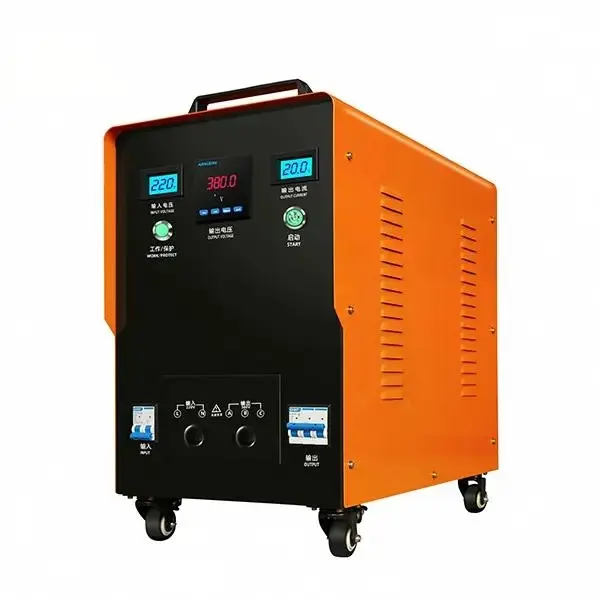

3. Industrial Applications of Three Phase Voltage Stabilizers
Three-phase voltage stabilizers are widely used in industrial environments where electrical equipment requires a reliable and consistent power supply.
Manufacturing Factories
Manufacturing facilities operate multiple machines simultaneously. Voltage fluctuations can interrupt production processes and affect equipment performance.
A suitable industrial voltage stabilizer helps maintain stable power for automated production lines, control cabinets, and manufacturing machinery.
CNC Machines and Precision Equipment
CNC machines rely on electronic control systems, servo drives, and precision motors.
Unstable voltage may trigger machine alarms, interrupt machining operations, or cause unexpected shutdowns.
A properly selected three phase voltage stabilizer helps maintain the electrical conditions required for reliable operation.
Pumps, Compressors, and Industrial Motors
Three-phase motors are commonly used in water treatment plants, air compressors, industrial pumps, and HVAC systems.
Undervoltage and voltage imbalance can increase motor current and heating. A suitable voltage stabilization system helps reduce these risks.
However, motor starting current and short-duration voltage dips must also be considered during equipment selection.
Textile, Plastic, and Food Processing Industries
These industries often operate continuous production equipment. Unexpected power interruptions can result in material waste and production losses.
A properly configured automatic voltage regulator supports more stable operation across different production processes.
4. How to Choose the Right Industrial Three Phase Voltage Stabilizer
Selecting the correct capacity and technical configuration is more important than simply purchasing a high-capacity machine.
Consider the following factors:
1. Rated Capacity (kVA)
Calculate the total electrical load and its power factor before selecting the stabilizer.
The basic three-phase apparent power formula is:
S (kVA) = √3 × Voltage (V) × Current (A) ÷ 1,000
Alternatively:
kVA = Total kW ÷ Power Factor
Add an appropriate design margin to account for future expansion and motor-starting requirements.
2. Input Voltage Range
Measure the actual minimum and maximum incoming voltage at the installation site.
For example, a factory with a nominal 400V supply may experience fluctuations between 340V and 430V.
The stabilizer must have a correction range that covers the actual operating conditions.
3. Output Voltage Accuracy
Different applications require different regulation accuracy.
For general industrial machinery, ±2% to ±3% may be acceptable, while sensitive equipment may require tighter regulation.
Always confirm the equipment manufacturer’s requirements.
4. Phase Regulation Method
For facilities with unbalanced three-phase loads, check whether the stabilizer supports independent phase regulation or another suitable compensation arrangement.
5. Protection Functions
Important protection features include overvoltage, undervoltage, overload, short circuit, phase loss, and overtemperature protection.
5. Three Phase Voltage Stabilizer Capacity Calculation Example
Consider an industrial factory with the following electrical requirements:
| Parameter | Value |
|---|---|
| Total active load | 200 kW |
| Power factor | 0.90 |
| Rated voltage | 400V |
| Design margin | 25% |
Step 1: Calculate the required apparent power.
200 kW ÷ 0.90 = 222.2 kVA
Step 2: Add a 25% design margin.
222.2 × 1.25 = 277.75 kVA
Step 3: Select a suitable capacity.
A 300 kVA three phase voltage stabilizer may be an appropriate starting selection.
At 400V, its rated three-phase output current is approximately:
300 × 1,000 ÷ (1.732 × 400) = 433A
This is an illustrative sizing example, not a final engineering specification. Motor starting currents, simultaneous equipment operation, harmonic loads, and future expansion must be evaluated before confirming the final capacity.
6. Servo vs Static Three Phase Voltage Stabilizer
Industrial buyers commonly compare servo-controlled and static voltage stabilizers.
| Comparison | Servo Type | Static Type |
|---|---|---|
| Regulation method | Servo motor | Electronic control |
| Velocidad de ajuste | Mechanical | Generally faster |
| Moving parts | Sí | No conventional moving parts |
| Mantenimiento | Periodic inspection | Generally lower |
| Typical applications | General industrial loads | Dynamic and sensitive loads |
A servo voltage stabilizer is suitable for many general industrial applications requiring continuous voltage correction and high-capacity operation.
A static voltage stabilizer is worth considering when rapid voltage correction and precise regulation are important.
The final choice should depend on the load characteristics, voltage fluctuation profile, operating environment, and budget.
For product information, explore KESUN’s servo voltage stabilizer and static voltage stabilizer solutions.
7. Frequently Asked Questions
Q1: What is the difference between a single-phase and three-phase voltage stabilizer?
A single-phase stabilizer regulates one phase, while a three-phase stabilizer is designed for three-phase electrical systems commonly used in industrial applications.
Q2: Can a three phase voltage stabilizer protect industrial motors?
Yes. It helps maintain voltage within the specified output range. However, it does not replace motor overload protection, short-circuit protection, or appropriate motor starting equipment.
Q3: How do I calculate the required kVA capacity?
Divide the total active load in kW by its power factor, then consider an appropriate safety margin and motor starting requirements.
Q4: Can a three-phase stabilizer be customized?
Yes. Input voltage range, output voltage, rated capacity, frequency, regulation accuracy, and protection configuration can be customized according to project requirements.
Q5: How do I choose a reliable three phase voltage stabilizer manufacturer?
Evaluate manufacturing experience, technical support, product testing, quality control, customization capabilities, and export experience. Request detailed technical specifications before placing an order.
Conclusion: Find the Right Three Phase Voltage Stabilizer Manufacturer
A reliable three phase voltage stabilizer plays an important role in maintaining stable electrical conditions for industrial machinery and production systems.
Before purchasing, evaluate the actual input voltage fluctuations, total load capacity, power factor, motor starting current, and required output accuracy.
KESUN provides industrial voltage stabilizers and customized power solutions for international customers. With OEM and ODM support, professional manufacturing capabilities, and product testing procedures, KESUN can help buyers identify suitable voltage stabilization solutions for different industrial applications.
Need a customized three phase voltage stabilizer for your project?
Contact KESUN today. Send us your rated capacity, input voltage range, output voltage, frequency, and application details to receive a suitable technical proposal and quotation.