
Selecting the correct industrial transformer is one of the most consequential decisions for any power distribution project. It directly affects operational uptime, energy costs, and long-term safety. Whether you are specifying a distribution transformer for a new facility or upgrading an existing substation, this guide covers the essential criteria to help you choose wisely.
1. Load Capacity and kVA Rating
Transformer selection starts with the kVA rating, which defines the maximum load the unit can safely handle. Undersizing leads to overheating and premature failure, while oversizing wastes capital. A practical rule is to operate at 50% to 70% of rated capacity, where efficiency typically peaks. For facilities with expansion plans—such as adding CNC machines or new production lines—factor future load growth into your calculations now to avoid costly replacements later.
2. Voltage Ratings and Phase Compatibility
Your transformer must precisely match both the utility supply voltage (primary) and the equipment voltage (secondary). Mismatched voltages can damage sensitive equipment and create safety hazards. Confirm the frequency (50 Hz or 60 Hz) and phase configuration (single-phase or three-phase transformer) required for your region and application.
3. Dry-Type vs. Oil-Immersed Transformers
Choosing between dry-type and oil-immersed transformers is the most critical decision, based on the installation environment and safety requirements.
Dry-type transformers use air or cast resin for insulation and cooling. Because they contain no combustible liquids, they are inherently fire-resistant and self-extinguishing. This makes them the preferred choice for indoor installations such as hospitals, data centers, high-rise buildings, and commercial basements, where fire safety regulations are extremely strict. Because they don’t require oil containment pits or fire-rated vaults, they can often be installed much closer to the load centers, reducing cable costs. They are typically available up to roughly 35 kV and offer simpler, safer maintenance with no risk of oil leakage, making them well-suited for environmentally sensitive areas.
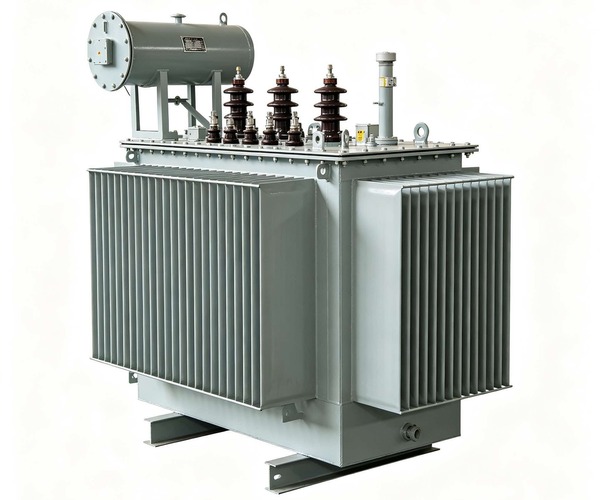
Oil-immersed transformers, by contrast, use mineral oil as both an insulating medium and a cooling agent. They offer superior overload capacity, excellent heat dissipation through natural oil convection, and higher full-load efficiency—typically 98.5% to 99.7% versus 98.0% to 99.2% for dry-type units. This high efficiency lowers operational costs over the transformer’s lifespan. They are highly cost-effective and ideal for outdoor substations and large-capacity industrial distribution. However, because the oil is flammable and can pose an environmental hazard if it leaks, they require dedicated fire-rated vaults, containment systems, and strict adherence to safety clearances. They also require regular maintenance, including periodic oil dielectric testing and dissolved gas analysis (DGA), to monitor insulation health.

4. Energy Efficiency and Compliance
As global regulations tighten, transformer efficiency is no longer optional. Standards such as the U.S. DOE regulations, the EU Ecodesign directive, and IEC 60076-20 impose strict limits on no-load and load losses. These losses accumulate continuously over a transformer’s 20–40 year lifespan, making a low-efficiency unit far more expensive in total cost of ownership than its purchase price suggests. Always request IEC or DOE efficiency test reports from your supplier, and specify premium-efficiency designs for projects targeting green-building or carbon-reduction goals.
5. Maintenance and Long-Term Reliability
Proper maintenance ensures your transformer reaches its expected service life. Dry-type transformers generally require only periodic cleaning and connection checks. Oil-immersed transformers demand routine dissolved gas analysis (DGA) and oil dielectric testing to monitor insulation health. For critical facilities, specifying transformers with remote monitoring capabilities adds a layer of operational assurance.
Kết luận
Selecting the right transformer requires balancing load requirements, environmental conditions, safety standards, and lifetime energy costs. By evaluating these factors systematically, you can secure a reliable power supply that protects your equipment and minimizes downtime.
For expert guidance on transformer selection and to explore our range of high-efficiency dry-type and oil-immersed transformers, contact our engineering team today.